Indigenous Football Australia oversees the strategy and expansion of Australia’s most successful and longest-running Indigenous football initiative, John Moriarty Football.
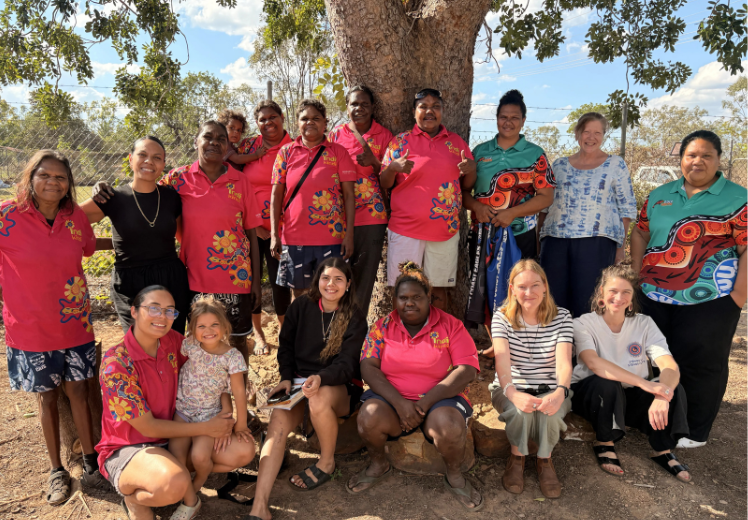
Moriarty Foundation is driven by a dedicated and passionate team, including our head office staff, volunteer Board, local coaching staff, local educators as well as our supportive partners.
Indigenous Football Australia oversees the strategy and expansion of Australia’s most successful and longest-running Indigenous football initiative, John Moriarty Football.
Moriarty Foundation is driven by a dedicated and passionate team, including our head office staff, volunteer Board, local coaching staff, local educators as well as our supportive partners.
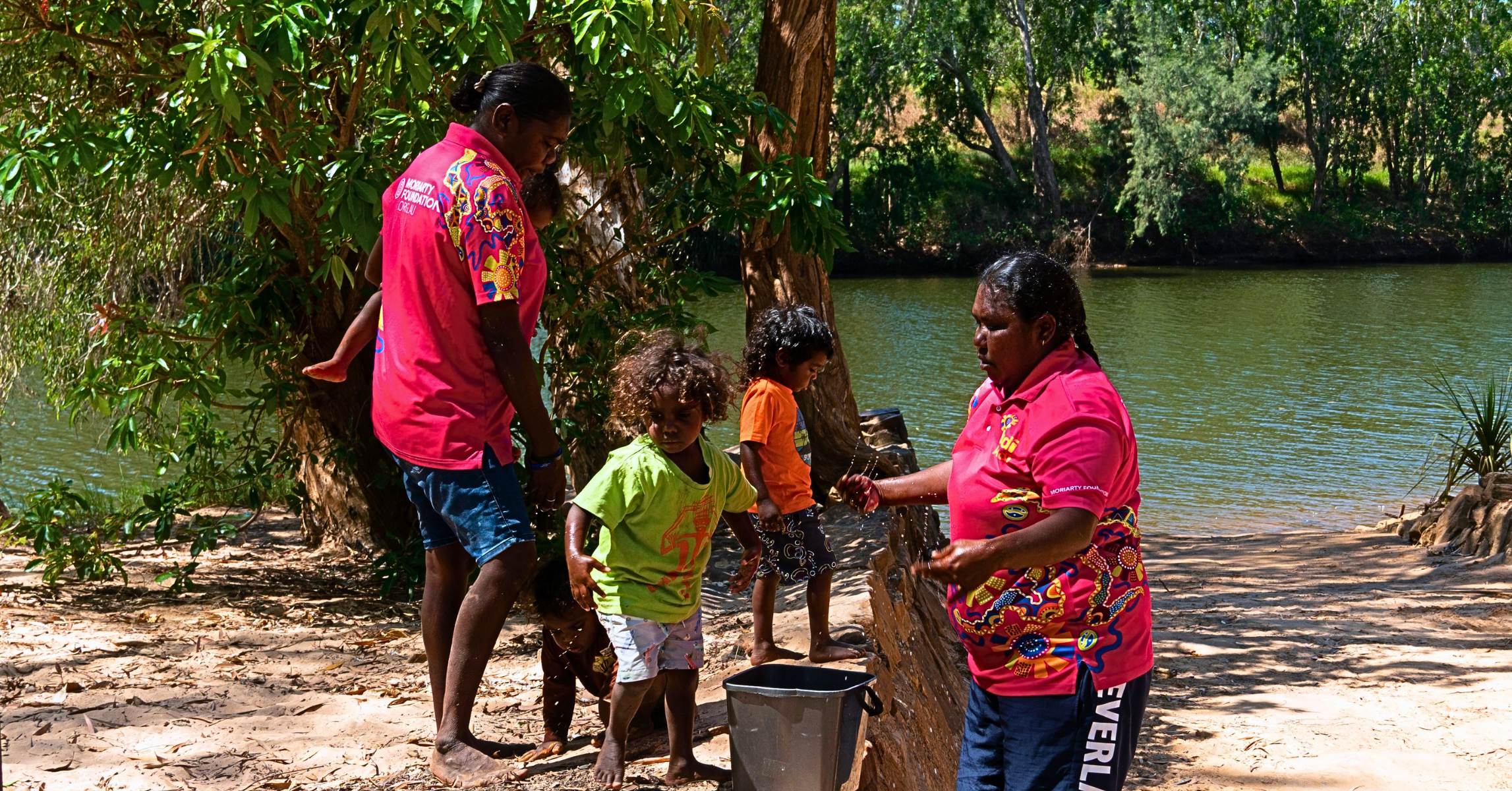
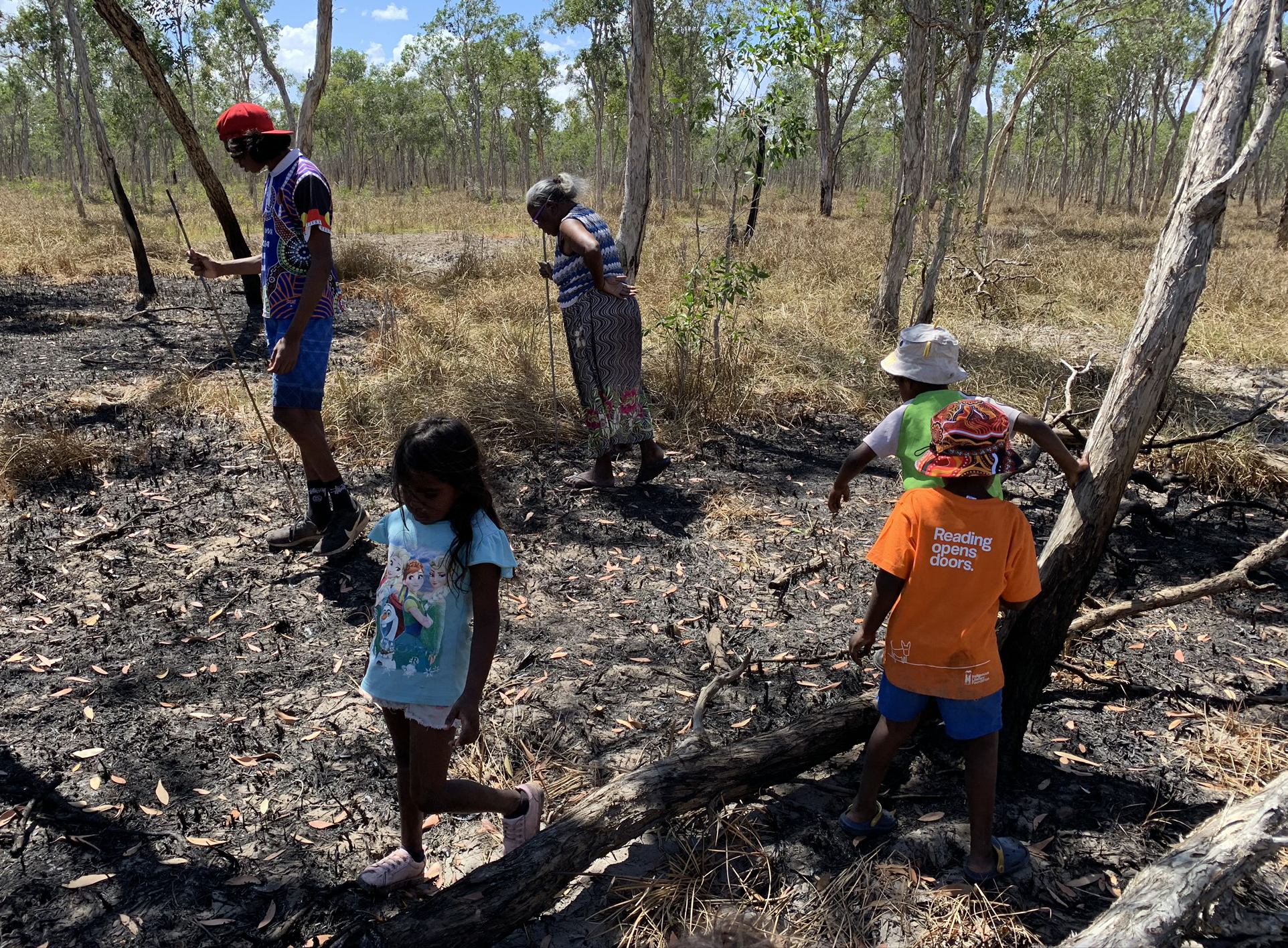
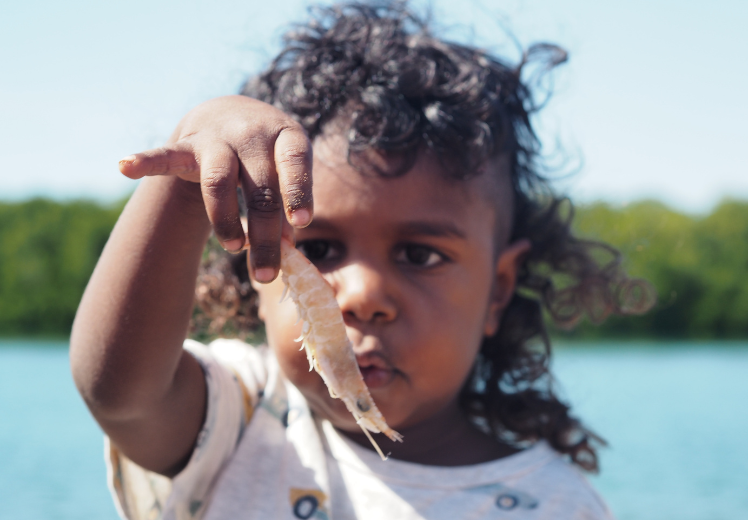
Whether it’s fishing on the banks of the McArthur River, exploring the creek at Karlu Karlu, or turtle hunting in the bush, Indi Kindi’s ‘Walking Learning®’ classrooms have no walls. As Borroloola’s Law women say, “you can’t talk Dreaming, you have to walk it”.
Walking Learning® is the ground-breaking curriculum delivered by Indi Kindi, an early education program for Aboriginal and Torres Strait Islander children from birth to five years of age living in remote Northern Territory.
Delivered on Country by 100 percent Aboriginal educator teams, Walking Learning® blends Aboriginal teaching methodology with best-practice early childhood pedagogy in alignment with the National Early Years Learning Framework. This innovative approach is grounded in its cultural relevance, supporting children to be strong in identity and have a life-long base for learning.
“Indi Kindi’s ‘Walking Learning®’ model demonstrates a culturally-responsive approach to early learning. Delivered outdoors, the model allows for movement, and creative expression, catering to the cognitive strengths of young Aboriginal learners.” – Deloitte Access Economics, 2024.
Turtle hunting in Borroloola, NT
In Walking Learning® children learn outside, on Country, through touch, sound, movement, sight, taste, and smell. This multisensory model encourages creativity, resourcefulness, and curiosity—all skills learned through the dynamic interaction of children with each other and the world around them.
The phrase ‘walking’ speaks to the importance of outdoor learning as an enabler for freedom of movement, creative expression, experiential play and self-regulation. This holistic approach supports diverse learning styles by leveraging the proven link between physical movement and cognitive function.
Indi Kindi’s Walking Learning® methodology aims to:
Support connection to Country and culture: Provides daily, year-round access to outdoor learning on Country, allowing children to learn and understand their place in both the natural and built environments.
Offer multi-sensory and dynamic learning: Immerses children in sensory rich experiences that cannot be replicated inside a physical classroom.
Encourage movement, exploration and physical freedom: Gives children the space to move more freely, climb higher, make noise and explore.
Foster active, inquiry-based learning: Promotes curiosity, observation, prediction and evaluation through hands-on, real-world exploration.
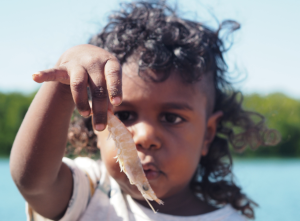
Teaching young learners to fish at Indi Kindi Borroloola
Walking Learning® examples:
Sound walk: describe/identify sounds to develop skills in listening
Scavenger hunt walk: find certain items by following instructions
Obstacle walk: navigate obstacles developing awareness of positional language
Little creatures walk: find and observe little creatures on the walk
Pattern walk: follow a line in the sand/chalk for balance and coordination
Nature patterns walk: find textures and make rubbing patterns
Number/shape walk: identify numbers and shapes on the ground
Treasure walk: collect items for imaginative play
Photo walk: take photos from child’s perspective
I spy walk: describing and observing items of interest in the environment
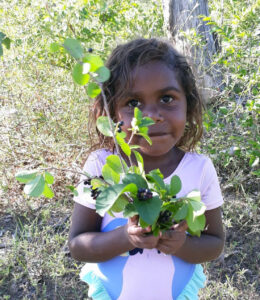
Bush berry gathering in Borroloola, NT
Demonstrable, life-changing impacts:
When early childhood education is culturally grounded and place-based, children achieve long-term developmental milestones. Independent evaluations demonstrate the deep impact of Indi Kindi and its Walking Learning® curriculum:
Improved developmental outcomes: Since Indi Kindi was established in Borroloola, Northern Territory in 2012, the proportion of developmentally vulnerable children fell from 74% to 42% in 2021.
Positive transition to school: At the start of 2026, Indi Kindi achieved a 100 percent successful transition rate of young learners to formal preschool in our delivery hubs of Borroloola and Tennant Creek. Our young graduates are strong in identity and culture, supporting children to transition to school with confidence and security.
Increased access to early childhood education: Indi Kindi removes barriers to access by providing a free service, including free door to door transport and a simplified enrolment process.
Holistic wellbeing: The program promotes physical health and nutrition, improves access to external health services, and fosters social and emotional wellbeing.
Local capacity building: By employing local Aboriginal educators and providing pathways to professional qualifications, Indi Kindi supports sustained employment and community leadership.