Supporting social and emotional wellbeing on Country in Borroloola
September 11, 2026


In 2025, Moriarty Foundation, with the support of Northern Territory Primary Health Network, introduced a Social and Emotional Wellbeing (SEWB) program in Borroloola, Northern Territory. Guided by an Aboriginal worldview, this community-led initiative supports children, youth, families, and local team members to be strong in family, community, and culture.
This type of program is vital in remote communities like Borroloola, where intergenerational impacts on wellbeing, health, education, and early development persist due to political, social, and historical factors.
Decades of top-down policy have strained relationships with government services, making earned trust and local voice essential for effective delivery. Socioeconomic disadvantage—including housing stress and restricted healthcare—creates daily pressure across mind, body, family, and community. Traditional, top-down health and wellbeing models often fail because they operate outside local culture and priorities.
As an Aboriginal Community-Controlled Organisation, this wellbeing program is designed to be holistic, culturally safe, trauma-informed, and aligned with local priorities. The initiative builds directly upon our two core programs: Indi Kindi and John Moriarty Football (JMF), which use sport and education to create pathways that lead to improved outcomes in child development, education, wellbeing, health and employment.
In the past 12 months, the wellbeing program achieved significant impact and reached 369 community members, almost half of Borroloola’s total population, across 236 sessions.
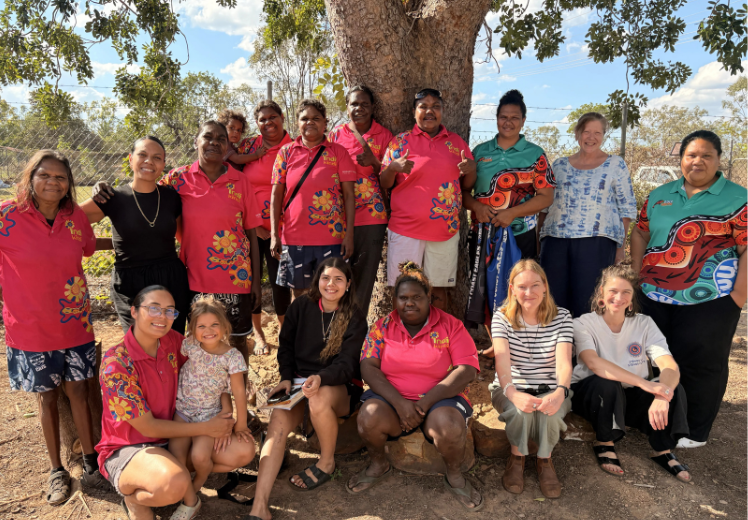
Overseen by Moriarty Foundation’s Wellbeing Coordinator, Zoe Richardson, a public health professional and community wellbeing specialist, the program integrates tailored activities on Country.
These include brain health, weaving and children’s emotional literacy workshops, bush tucker and cooking on Country sessions, support for employees to attend cultural festivals and events, and women’s camps. These initiatives complement daily Walking Learning® and JMF sessions, embedding wellbeing and mental health literacy into existing routines.
By embedding social and emotional wellbeing into daily delivery on Country, our local teams are supporting Aboriginal and Torres Strait Islander families in Borroloola to lead their own healing and growth.
Latest News